
Contact Us
Top 10 Dental Implant Restoration Types for Global Buyers
Choosing the right dental restoration can influence comfort, appearance, maintenance, and long-term treatment planning. For global buyers, the decision involves more than price or product images. It requires careful attention to clinical indications, material quality, laboratory precision, supplier reliability, and after-sales support.
This guide introduces ten widely used Dental implant restorations, including single crowns, implant-supported bridges, overdentures, and full-arch solutions. Each type serves different anatomical, functional, and aesthetic needs. A posterior molar crown may prioritize strength, while an anterior restoration may demand lifelike translucency and careful shade matching. Small details matter, such as occlusal design, abutment compatibility, screw access, and cleaning space.
Not every option suits every mouth. Bone volume, soft-tissue condition, bite forces, hygiene habits, and patient expectations must guide selection. Buyers should request technical documentation, material certificates, product traceability, and clear warranty terms from qualified manufacturers or dental laboratories. Local clinical regulations also require attention, since approval pathways and import requirements vary between markets.
A neat ranking can mislead. “Best” depends on the patient, clinician, laboratory, and treatment goal. Product photography cannot confirm fit or biological performance. Even experienced teams may revise a choice after reviewing scans, impressions, or functional testing. This overview offers a practical starting point, not a substitute for professional diagnosis. Its purpose is to help international buyers compare restoration types with greater confidence, ask better questions, and recognize where expert judgment remains essential.
Define Dental Implant Restorations: Components, Materials, and 90%+ Survival Rates
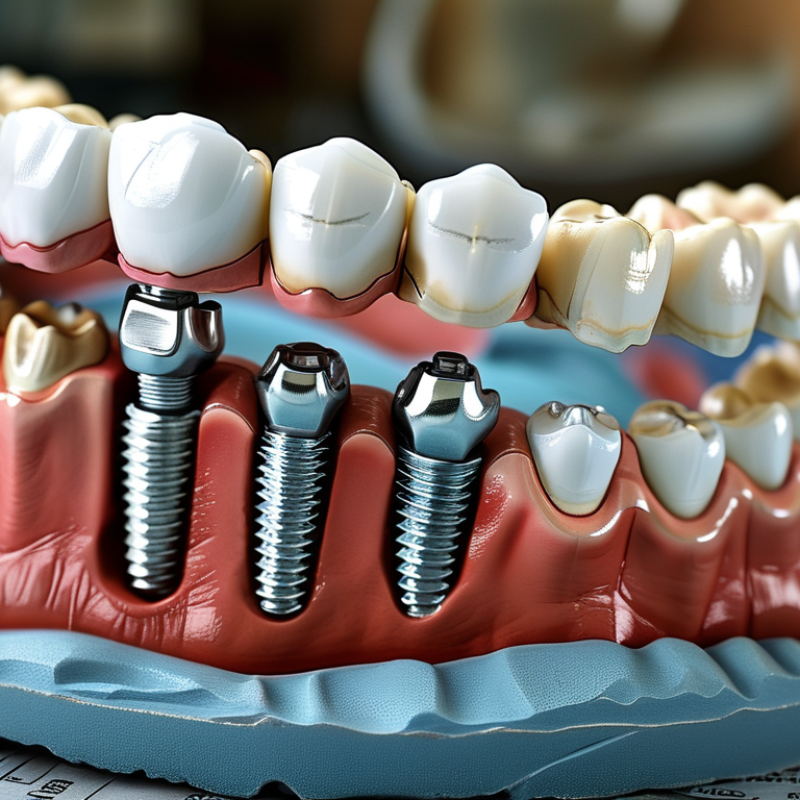
Dental implant restorations replace visible teeth, not the entire implant system. A typical restoration has three parts: the implant fixture inside bone, the abutment above it, and the crown, bridge, or denture attached to the abutment. The fixture provides support. The restoration restores chewing, speech, and appearance.
Common types include single-tooth crowns, implant-supported bridges, overdentures, and fixed full-arch restorations. Materials influence strength, appearance, and maintenance. Titanium implants are widely used because they integrate well with bone. Zirconia abutments and ceramic crowns can offer a natural-looking finish, especially near the front teeth. Metal-ceramic options remain practical for heavy chewing areas. Resin teeth may reduce cost, but they can wear or chip sooner.
The often-quoted 90%+ survival rate needs careful interpretation. Many long-term studies report high implant survival, but results vary by bone quality, smoking, diabetes control, oral hygiene, and maintenance visits. The crown itself may need repair earlier than the implant. That distinction is easy to miss.
Fit matters. A clinician checks the bite, gum position, scan accuracy, and cleaning access before final placement. Tiny food traps around a bridge can become a daily frustration. Even excellent materials cannot correct poor planning. Patient expectations also require honest discussion; no restoration feels exactly like a natural tooth. Research is strong, yet individual outcomes remain imperfect.
Top 10 Dental Implant Restoration Types for Global Buyers
Define Dental Implant Restorations: Components, Materials, and 90%+ Survival Rates
| No. | Restoration Type | Main Components | Common Materials | Typical Indication | Estimated 5-Year Implant Survival | Key Purchasing Considerations |
|---|---|---|---|---|---|---|
| 1 | Single-Tooth Crown | One implant fixture, abutment, and individual crown | Titanium or zirconia implant; titanium, zirconia, lithium disilicate, or veneered ceramic crown | Replacement of one missing tooth without preparing adjacent teeth | Approximately 95–98% | Connection accuracy, emergence profile, shade matching, screw-access design, and prosthetic compatibility |
| 2 | Implant-Supported Bridge | Two or more implants, abutments, and a multi-unit fixed bridge | Titanium framework, zirconia, cobalt-chromium, porcelain-fused-to-metal, or layered ceramic | Several adjacent missing teeth in the same arch segment | Approximately 93–97% | Passive fit, load distribution, cantilever control, hygiene access, and framework strength |
| 3 | Full-Arch Fixed Prosthesis | Four to six or more implants, multi-unit abutments, framework, and fixed denture bridge | Milled titanium or cobalt-chromium framework, acrylic resin, composite, zirconia, or hybrid ceramic | Complete-arch edentulism or severely compromised dentition | Approximately 92–98% | Implant distribution, framework passivity, occlusal scheme, repairability, hygiene design, and digital workflow |
| 4 | Implant-Retained Overdenture | Two or more implants, attachments, a denture base, and removable teeth | Titanium or zirconia implants, titanium bars, metal housings, nylon inserts, acrylic resin, and denture teeth | Edentulous patients seeking improved retention over a conventional denture | Approximately 90–97% | Attachment durability, insert replacement, base fracture resistance, tissue support, and ease of cleaning |
| 5 | Screw-Retained Crown | Implant, screw-retained abutment or crown, and prosthetic screw | Titanium base, zirconia, lithium disilicate, monolithic ceramic, or porcelain-fused-to-metal | Fixed single-tooth or short-span restorations requiring retrievability | Approximately 95–98% | Screw preload, anti-rotation geometry, torque specifications, access-channel sealing, and retrievability |
| 6 | Cement-Retained Crown | Implant, cementable abutment, luting cement, and crown | Titanium or custom zirconia abutment with ceramic, zirconia, or porcelain-fused-to-metal crown | Cases requiring favorable abutment angulation and a controlled occlusal surface | Approximately 94–98% | Abutment height, cement cleanup, margin position, retention form, and biological complication control |
| 7 | Immediate Provisional Crown | Implant, temporary abutment, provisional crown, and temporary resin | PMMA, bis-acryl composite, titanium, or reinforced temporary resin | Immediate aesthetics and soft-tissue shaping after immediate or early implant placement | Approximately 94–98% for carefully selected cases | Primary stability, non-functional occlusion, hygiene contours, provisional strength, and transition to final restoration |
| 8 | Custom Abutment and Ceramic Crown | Implant, patient-specific abutment, screw or cement interface, and ceramic crown | Titanium or zirconia abutment with lithium disilicate, feldspathic ceramic, or zirconia crown | Highly visible anterior teeth or anatomically challenging emergence profiles | Approximately 94–98% | Soft-tissue support, abutment margin design, optical properties, CAD/CAM precision, and ceramic thickness |
| 9 | Zirconia Implant Restoration | Ceramic implant or titanium implant with zirconia abutment and zirconia restoration | Yttria-stabilized zirconia, usually with a ceramic or titanium connection component | Metal-free treatment preference and selected anterior or posterior applications | Approximately 90–96% | Connection design, fracture resistance, indication limits, evidence maturity, surface characteristics, and laboratory capability |
| 10 | Bar-Retained Overdenture | Two to six implants, splinted bar, clips or attachments, denture base, and prosthetic teeth | Milled or cast titanium, cobalt-chromium, acrylic resin, metal housings, and replaceable clips | Complete-arch rehabilitation where additional retention, stability, and splinting are needed | Approximately 92–97% | Bar passivity, vertical space, clip maintenance, hygiene access, denture reinforcement, and repair logistics |
Related Posts
-
Top Removable Denture Solutions for a Confident Smile?
-
10 Best Complete Denture Treatments for Global Buyers?
-
Top 10 Complete Denture Treatments You Should Know?
-
2026 How to Optimize CBCT Guided Surgery for Better Outcomes?
-
What is Dental Implant Technology and How Does It Work?
-
2026 Top Trends in Dental Prosthetic Design for Global Buyers?